The MINT framework employs a robust business object model to represent the key entities in the automotive sales domain. These objects form the foundation for the business processes described in the previous section, providing a consistent data model across the application.
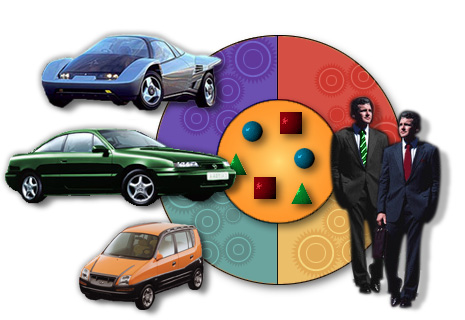
Business objects in the MINT framework are designed to bridge the gap between the business domain (vehicles, customers, dealers) and the technical implementation. Each object encapsulates specific business rules and behaviors, ensuring consistency across different parts of the application.
Vehicle
The Vehicle object represents automotive products available for sale. It encapsulates all information about vehicle models, options, features, and configurations.
Key Attributes
- Model: The vehicle's model designation
- Series: Production series or generation
- Configuration: Specific configuration of options and features
- Technical Specifications: Engine, transmission, dimensions, etc.
- Visual Assets: Images, videos, and 3D models
- Pricing: Base price and option pricing
Customer
The Customer object represents individuals or organizations interested in purchasing vehicles. It maintains customer information, preferences, and interaction history.
Key Attributes
- Contact Information: Name, address, phone, email, etc.
- Preferences: Vehicle preferences and requirements
- Interaction History: Record of previous interactions
- Purchase History: Previously purchased vehicles
- Status: Prospect, active customer, etc.
Dealer
The Dealer object represents authorized ACME dealerships. It contains information about dealership locations, inventory, and capabilities.
Key Attributes
- Identification: Dealer code, name, and location
- Inventory: Available vehicles and demonstration models
- Capabilities: Service offerings and specializations
- Personnel: Sales staff and technical experts
- Sales Territory: Geographic sales area
Configuration
The Configuration object represents a specific vehicle build with selected options and features. It links vehicle models with customer-selected options.
Key Attributes
- Base Model: The underlying vehicle model
- Options: Selected optional equipment and features
- Validation Rules: Rules ensuring valid option combinations
- Pricing Calculation: Total price based on selections
- Visualization Data: Information for visual rendering
Order
The Order object represents a customer's vehicle purchase order. It tracks the status of orders from creation through delivery.
Key Attributes
- Order Number: Unique identifier
- Customer: The ordering customer
- Dealer: The selling dealer
- Configuration: The ordered vehicle configuration
- Status: Current order status
- Timeline: Order dates and delivery schedule
These business objects form the core data model of the MINT framework. The framework structure provides the technical implementation of these objects, while the MINT layers describe how these objects are distributed across the application architecture.